Why I Seriously Don’t Get the Java Hate (And Why It’s Still a Kingpin in 2026)

Let’s face it: hating on Java is practically a rite of passage for modern software developers.
If you browse tech Twitter, Reddit, or TikTok, the narrative is always the same.
“Java is too verbose.”
“It’s slow.”
“It’s a legacy dinosaur kept alive only by enterprise life support.”
But here is the honest truth:
Most of the Java hate you hear today is completely outdated, highly exaggerated, or just plain wrong.
In fact, if you look under the hood of modern Java, you’ll find one of the most resilient, high-performing, and rapidly evolving ecosystems in the entire tech industry.
What You Will Learn Today
In this post, I am going to break down exactly why the anti-Java circlejerk makes no sense. By the end of this read, you will discover:
- The massive shift from “Old Java” to “Modern Java” (and the features changing the game).
- The real reason why the world’s biggest tech companies still bet their entire infrastructure on it.
- Why learning or sticking with Java is one of the smartest career moves you can make right now.
Let’s dive right in.
The Myth of the “Slow and Verbose” Dinosaur
First, let’s tackle the biggest complaint: Verbosity.
People love to paste a 20-line block of Java boilerplate just to print “Hello World” or create a basic data class, comparing it to a single line of Python.
And to be fair? Ten years ago, they had a point.
But Java didn’t sit still. Thanks to the six-month release cadence introduced a while back, the language has been aggressively shedding its weight.
Take a look at how drastically things have changed:
- Records: Say goodbye to writing endless getters, setters,
equals(),hashCode(), andtoString()methods. A single line of code now gives you an immutable data carrier. - Local Variable Type Inference (var): You no longer need to declare
Map<String, List<User>> map = new HashMap<String, List<User>>();. Just writevar map = new HashMap<String, List<User>>();and let the compiler handle it. - Switch Expressions and Pattern Matching: Streamlined, functional, and drastically less error-prone than the old boilerplate blocks.
What about performance?
If someone tells you Java is slow, they are likely living in 2004. With modern Just-In-Time (JIT) compilation, advanced garbage collectors like ZGC (which boasts sub-millisecond pause times), and the revolutionary Project Loom introducing lightweight virtual threads, Java handles massive concurrency with jaw-dropping efficiency.
The Invisible Engine of the Global Economy
Here is a fun experiment: Try to go a single day without interacting with a system running on Java.
Spoiler alert: You can’t.
While trendy frameworks and flashy new languages capture the hype cycle, Java quietly runs the actual world.
| Industry | How Java Rules It |
| Global Finance | Virtually every major bank uses Java for secure, high-frequency, massive-scale transaction processing. |
| Big Data & AI Infrastructure | Apache Spark, Kafka, Flink, and Lucene (which powers Elasticsearch) are all built entirely or heavily on the JVM. |
| Enterprise Streaming | Netflix relies massively on Java to orchestrate its massive global streaming architecture. |
| Android Ecosystem | Millions of mobile apps are fundamentally rooted in Java infrastructure. |
Why do these tech giants choose Java over the trendy language of the month?
Simple: Backward compatibility and predictability.
Java offers an unmatched level of long-term stability. A business can upgrade its Java version to get massive performance boosts without rewriting their entire codebase from scratch. In the enterprise world, that predictability is worth millions of dollars.
The JVM is a Masterclass in Engineering
When people say they hate Java, they are usually talking about the syntax. But they completely overlook the crown jewel: The Java Virtual Machine (JVM).
The JVM is arguably one of the greatest pieces of software engineering ever created.
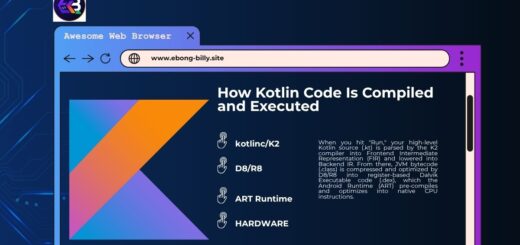
It optimizes your code dynamically while it runs, adapting to the specific hardware it’s sitting on. Furthermore, the JVM has become a polyglot launchpad. If you truly dislike Java’s syntax, the ecosystem grants you seamless interoperability with brilliant modern languages like Kotlin or Scala—all while leveraging the bulletproof reliability of the JVM infrastructure.
You aren’t just adopting a language; you are plugging into a battle-tested ecosystem backed by billions of dollars in R&D.
The Bottom Line: Hype Dies, Substance Stays
Tech trends come and go. Every year, a new language claims it will finally kill off the “dinosaur.”
Yet, Java remains firmly at the top of the TIOBE index, powering billions of devices and securing hundreds of thousands of high-paying engineering jobs worldwide.
The hate isn’t based on what Java is today—it’s based on what Java used to be two decades ago. If you want a language that is fast, hyper-scalable, wildly relevant, and consistently evolving, it’s time to drop the outdated memes. Java isn’t going anywhere.
What’s Your Take?
Now, I want to hear from you.
Are you a Java defender, or do you still think the verbosity is a dealbreaker? Have you given modern Java (Java 21+) a fair shot yet?
Leave a comment down below and let me know your thoughts! Let’s get the debate started.